Albero: Yellowish sand used for covering bodega aisles where it helps maintain humidity levels when sprinkled with water.
Alquitara: Pot still heated by a direct flame.
Amugronar: Layer the shoot of a vine so that the new plant fills the space left by a root stock
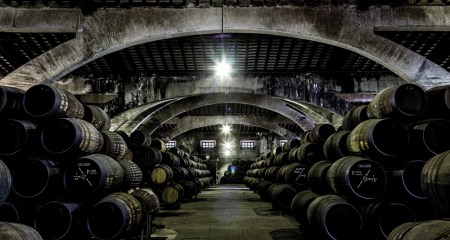
Andana: A tier of butts
Añadas: Brandy of a single vintage that has never been blended with another.
Arrumbador: Person whose job it is to position the butts and transfer, blend and clarify brandies
Aspilla: a wooden stick marked with a scale which is dipped into the butt of a known maximum capacity in order to calculate the quantity of liquid it contains
Batidero: Area of a cooperage where hoops are forged.
Blanduras: Very fine, early morning summer dew which forms on the vines in certain areas of the Jerez region.
Bojo: The part of a butt which has the largest diameter.
Bota: A term used in the Jerez region when referring to oak-wood butts
Cabecear: To rock a barrel from end to end so as to thus obtain a uniform mixing of its
contents.
Cabeza de Turco: Name given to the upper part of certain alquitara pot stills whose shape is reminiscent of an turban.
Cachón: A tier or grouping of barrels.
Canoa: Boat-shaped funnel used when replenishing brandy butts in the solera and criadera system.
Criaderas: Tiers of butts holding brandy of a similar age and quality, numbered according to their distance above the solera (first, second, third and so on).
Dolador: A cooperage craftsman who uses a range of special tools to make the staves, or “duelas”, of the butts.
Duelas: Each of the staves which go to make up the curved walls of a butt.
Encabezar: Strengthen with alcohol
Envinar: this refers to the process of “seasoning” butts by storing Sherry wine in them for two or more years.
Escalas: The number of tiers in the criadera system upon which the maturing of Brandy de Jerez is based.
See “Rocío” in this glossary.
Open: This means that the colour is very clear, not at all intense.
Amber: yellow, reddish tone.
Brilliante (Bright): Clear, transparent appearance with no visible cloudiness
Caoba (Mahogany): the tone generally acquired by the oldest brandies, somewhere between brown and yellow with certain greenish hues.
Castaño (Chestnut): the darker tone of the oldest brandies.
Dorado (Golden): a yellow-reddish hue where yellow predominates.
Limpio (Clean): Totally transparent, with no cloudiness.
Oro viejo (Old gold): Golden with a brownish hue.
Rasgos viejos (Aged): Predominant mahogany tint.
Yodo (Golden brown): Similar tone to iodine
Terms regarding aroma
Alcoholic: This is not a pejorative term meaning an excess of alcohol, in such a case it would be an aguardiente. It refers to a predominant, but not aggressive, presence.
Carob: Sweet and at the same time toasty, with a slight rustic tone. Especially noticeable in brandies aged in Pedro Ximenez soleras.
Varnish: A characteristic bouquet which comes after a long period of ageing in casks. The characteristic fragrance of wood which was varnished a long time ago has a similar aroma to that given off by an wine spirit aged in wood.
Cereal: An emanation similar to the dry smell of a barn and found in those distillates which have undergone a short ageing period in oaken butts. A characteristic deriving from the impurities inherited from the original distillates, which stand out above the wood.
With character: This is a characteristic which differentiates it from the rest, conveying a distinct or different ageing process
Dates: Refers to a sweetish fragrance reminiscent of fruit, with some suggestion of toastiness and a hint of raisins.
Attic: A fragrance of old, dry wood with a hint of the dust which is so usual to find in these places. To be found in certain Solera Gran Reserva brandies which have been aged in very old wood or butts
Elegant: An elegant brandy possesses that elusive quality which combines a series of the more noble nuances (perfumed wood, a light, pleasant complexity of distillate, bright open colours), not intensely aromatic but well balanced.
Ethereal: An attribute which defines brandy with a certain alcoholic intensity yet oxidative in evolution; the very alcoholic intensity revealing that the fragrance of the brandy has a lot to do with its age.
Fino (Fine): A synonym for elegant
Fruity: A characteristic which appears in distillates in the form of a whisper of fruitiness but also shrouded in a certain herbaceous hint from the distillation of wine.
Barn: A synonym for cereal
Herbaceous: Adjective used to describe a taste and aroma of herbs, attributes which persist in the low strength distillation typical of Holandas.
Intense: Strength of the fragrance immediately perceived upon lifting the glass to the nose.
Old furniture: An expression used to define a brandy with hint of acetone (like the varnish found on old furniture) after being aged in old, but healthy, butts.
Patisserie: A fragrance lying somewhere between sweet and toasty with a slight hint of vanilla and caramelised sugar, so characteristic of recently baked cakes. This is a distinguishing feature of those wines and brandies which have been aged for a long time in oak, fruit of their oxidative evolution and the contribution made by the vanilla fragrances absorbed from the oak-wood casks.
Pungent: A prominent aromatic note revealed by the alcoholic component in brandy.
Indications of maturity: Define signs of lengthy ageing
Tinges of Cherimoya: A sweetish fragrance of ripe fruit with a slight suggestion of exotic tropical fruit, which can be encountered in an old brandy which has been aged in butts which have previously contained Pedro Jimenez.
Saline: An attribute acquired by a brandy which has been aged in fine soleras.
Vanilla: A typical characteristic of distillates aged in oak-wood. The vanilla contained in the oak-wood barrel staves is absorbed during the ageing process.
Vegetable: A persistent characteristic encountered in brandy which has been aged in wood, generally found in soleras and some Solera Reserva.
Old: Along the lines of the attributes referred to earlier as old furniture and attic.
Vitality: Certain youthful characteristics may be found in an old brandy (distillate, new wood and so on) as a contrast to the characteristic of old furniture, attic or carob which is to be found in brandies aged for a long time.
Alcoholic: Tasting of spirits, but without being aggressive, not a defect.
Extensive: Term used to define the richness of flavours, as if filling the mouth. A sensation felt at the entrance of the mouth.
Warm: An intense, pleasant sensation of alcohol perceived in the mouth
Caramelised/Toffee: The sweetish, toasty taste characteristic of certain denser brandies which have been aged in Oloroso or Pedro Jimenez butts.
Meaty: Refers to a brandy with much body, as though you could chew it.
Complex: Almost a synonym for breed. Set of nuances of great richness which are difficult to pin down to one particular taste.
Concentrated: Sensation of density encountered in a brandy which is smooth and meaty, and whose characteristics are greatly accentuated.
Oxidative ageing: A term which refers to the part played by atmospheric oxygen in the organoleptic evolution of wine spirit. The continuous sacas and rocios expose the brandy to oxygen, which then facilitates the incorporation of fragrances and flavours from the wood.
Dense: This relates to body and refers to those brandies which provoke a sensation of thickness in the mouth.
Sweetness: A slight sweetness which stands out amidst the mainly dry taste of tannin.
Sweetened: Regarding sweetness.
Balanced: Term which defines a good brandy as it denotes a harmonious balance of all the different elements (wine spirit and oak-wood ageing) and savoury nuances: one where no individual part is dominant.
Nutty: Usually from oxidative ageing in contact with the air, generating aromas and tastes which are reminiscent of nuts (bitter almond, hazelnut, walnut, etc …). When the ageing process is prolonged, and especially in old wooden casks, another range of tastes must be added to the above, that of figs, dates and raisins, etc …
Fat: That smooth, pleasantly oily sensation on the palate of an old brandy with a moderate perception of alcohol.
Impurities: These should rather be referred to as “purities”, being substances which originate from the wine used in the distillation process.
Jerezano: Usually used to condense into one single term all the diverse characteristics of Sherry wine, particularly olorosos and amontillados, which some brandies possess.
Young: Used to refer to solera brandies which have undergone a shorter period of ageing in wood, the characteristics of distillation predominating over those of crianza.
Long: The name given to the aftertaste left by a brandy.
Light: The opposite of meaty, dense and concentrated.
Hint of dryness: Hints of dryness appear above a sensation of sweetness but not of tannin, in the case of brandy product of the dry taste of wood.
Hint of wood: Very defined undertones of wood (somewhere between timber and resin) which is generally encountered in those brandies which have been aged in younger butts.
Doughy: Not a pejorative term, it refers to a sweetish taste and a sensation of thickness.
Smack of alcohol: Slight excess of alcohol which is felt on the tongue but does not detract from the harmony of the whole.
Traces of distillation: Secondary aromas and tastes formed by the low strength distillation, that is to say, the stage prior to ageing the spirit, appear when the length of time spent in wood has been less. It is the tastes of aguardiente, but a finer, warmer taste than that of an orujo.
Rounded: An expression which is used a lot when talking of wines and spirits and which defines a beverage which is smooth and yet full-bodied.
Tasty: An acute, pleasant sensation in the mouth which reflects a great many of the qualities of brandy.
Smooth: A sensation experienced with the first contact upon the palate of an oily brandy with a hint of alcohol and oak-wood.
Tannin: A substance which is responsible for that rough taste often found in the peel of fruit and in wood. When applied to brandy it refers to that slightly rough touch which has been conferred by the wooden cask.
Torrefacto: The taste of having been roasted with a little sugar, and a very common characteristic of Brandy de Jerez. It is produced during the oxidation of the brandy and is accompanied by a concentration of taste due to the more intense evaporation and slight sweetness passed on from butts that have previously contained Oloroso, Cream or Pedro Ximenez.
Oily: Referring to the warm, slightly sweet oily touch of certain brandies and especially of the very old.