History

Nobody knows for sure if the art of distillation was first discovered in China or in Babylon, there can be no doubt, however, that it was the Moors (who settled in Spain, landing very near Jerez, in the year 711) who introduced the technique of distillation into the Western world. Being unable to drink the already famous wines to be found in the Jerez region for religious reasons, the Moors opted to distil them in order to obtain “alcohol” not only to make perfumes but also for antiseptic and medicinal use.

It is not easy to state the exact date upon which wine spirits began to be aged in oak-wood casks in order to produce brandy. What is clear is that in the sixteenth century there must have been an important amount of wine spirit being produced, as is illustrated by the existence of a document which makes reference to the fact that in 1580 the Town Council of Jerez handed over the revenue from the Wine Spirit Tax (a municipal tax levied on the production of wine spirit) for the construction of a Jesuit college.

  historiaGrabado del siglo XIX que representa unas antiguas bodegas a las afueras de la ciudad

The eighteenth and nineteenth centuries saw the consolidation in Spain of the production of wine spirit for commercial use destined for exportation, especially to countries in Northern Europe. Holland was the main market and from there shipped on to practically the whole world.

With this fact in mind it is no surprise that loan words such as brandy and holandas (wine spirit) entered the language of the trade from their country of origin. Brandy is an English adaptation of the original Dutch word “brandewijn” (burnt wine) whilst the term holanda (name given to wine spirits of low alcoholic content used in the production of Brandy de Jerez) is obviously derived from the name of the country to which most of the exports were destined: Holland.

With these precedents is no surprise that words such as brandy and holandas originate from that country. Brandy is the adaptation of the original Dutch term ‘brandewijn’ (burnt wine) whilst the term ‘holandas’ (name used to refer to wine spirits of low alcoholic content used in the production of Brandy de Jerez) would seem to derive from the name of the country to which the main part of its exports were sent.

In any case, it shouold be remembered that the term 'brandavin' was already in use in picaresque literature of the 17th Century, as can be seen in “The Life and Works of Estebanillo González, man of good humour”. 

  alambiqueAntigua Alquitara en una bodega de Brandy de Jerez

In the early 19th Century English and French merchants began to arrive in Jerez who, together with Spanish traders with clear commercial instincts, promoted trade and laid down the guidelines for the characteristic production and ageing process of Brandy de Jerez.

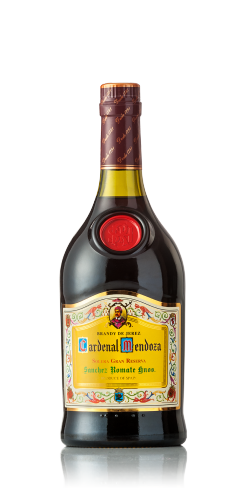
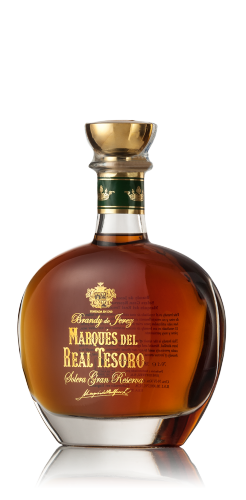
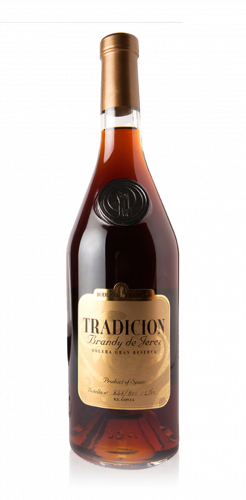
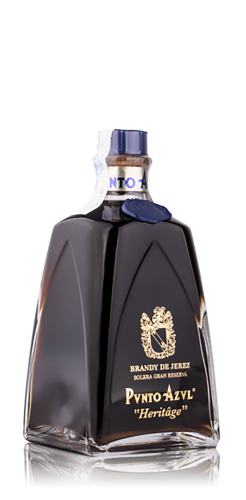
The creation of brand names for Brandy de Jerez occurred during the 19th Century on the initiative of sherry firms who were pioneers in the sale of brands which still exist today, not only in Spain but in numerous countries throughout the world.

As from the 20th Century Brandy de Jerez has undergone a phase of expansion and is now recognised all over the globe. It has become established as the main spirituous drink of all those produced and consumed in Spain, at the same time witnessing growth on the foreign market where it is becoming better established day by day.